
Introduction to Rath Yatra
What is Rath Yatra?
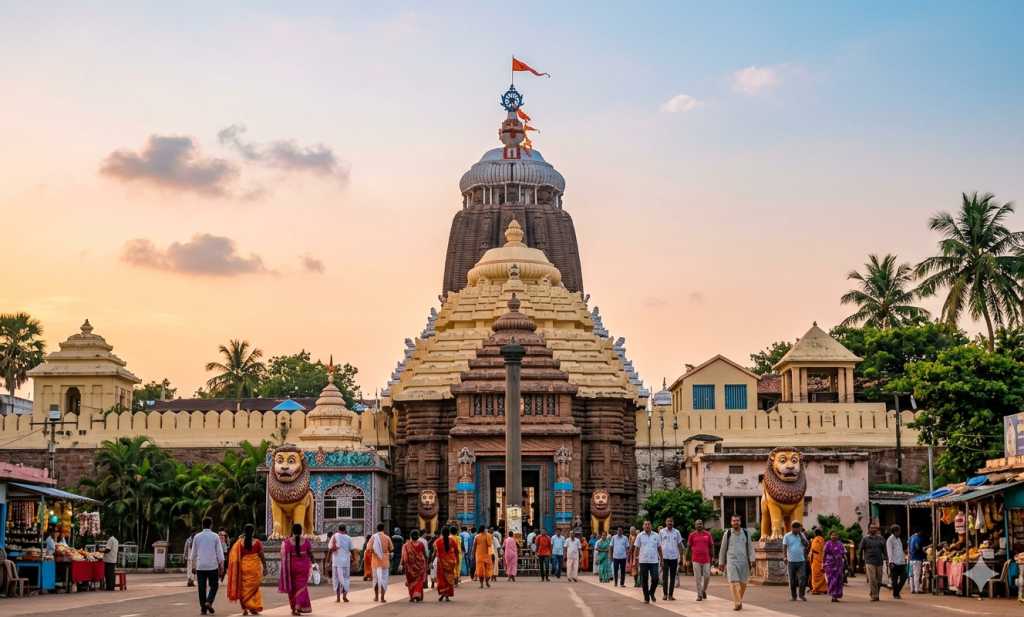
One of the most well-known Hindu festivals is puri Rath Yatra 2026, which is also called the Chariot Festival. It takes place in the holy city of Puri. Every year at this big event, Lord Jagannath, Lord Balabhadra, and Goddess Subhadra are taken out of the famous Jagannath Temple and put on huge wooden carts. This is how the carts get pulled along the Grand Road to the Gundicha Temple by devotees.
The event is one of the very few occasions that the gods leave the temple to meet with millions of devotees from all over India and the world. Along the famous Bada Danda (Grand Road), the trip from the Jagannath Temple to the Gundicha Temple is about three kilometres long.
Why Rath Yatra is One of the Biggest Festivals in India
A lot of people think that Rath Yatra is one of the biggest holy festivals in the world. Millions of religious people go to Puri every year to see the amazing procession and help pull the holy chariots.
What makes this event special is that it’s open to everyone. People of all faiths and backgrounds can watch and take part in the Rath Yatra procession, but not everyone is allowed to enter the Jagannath Temple. During the festival, the air is filled with music, words of devotion, and spiritual energy as the huge chariots move slowly through the crowded streets.
Also read- How to Reach Puri Rath Yatra
Significance of Rath Yatra in Hindu Tradition
In Hinduism, Rath Yatra is a very important sacred event. The Skanda Purana and other ancient texts talk about it as one of the most important Lord Jagannath events.
People who follow the religion believe that seeing the chariot parade or even touching the ropes that pull the chariots brings spiritual merit and blessings from God. Tradition says that the event shows how kind Lord Jagannath is because he comes out of the temple to bless all devotees, no matter their caste, creed, or social status.
History and Origin of Rath Yatra
Mythological Story Behind Rath Yatra
Hindu folklore is where the Rath Yatra got its start. Tradition says that the holiday marks Lord Jagannath’s yearly trip to the Gundicha Temple, which is thought to be the home of his aunt.
During the holiday, thousands of devotees ride in big chariots with the gods from the Jagannath Temple to the Gundicha Temple. The Bible says that this trip is a divine outing where the Lord meets his followers and blesses them.
Some ancient texts, like the Skanda Purana, say that seeing this holy procession can free people from the cycle of birth and death.
Historical Background of the Festival
The Rath Yatra in Puri has been going on for hundreds of years and is thought to be one of India’s oldest religious events that has always been going on. Several Hindu holy books, like the Skanda Purana and other sacred works, talk about the festival’s history.
The festival grew over time to become one of the most important religious and cultural events in eastern India. People who worship Lord Jagannath meet in many cities around the world to reenact the sacred procession. Today, Rath Yatra is celebrated not only in Puri but also in many other places.
Connection with Lord Jagannath
Many people honour Lord Jagannath as a form of Lord Vishnu or Lord Krishna. A part of the holy Char Dham journey is the Jagannath Temple in Puri, which is one of the most important places to visit in India.
The festival of Rath Yatra shows how kind Lord Jagannath is because he leaves the temple to bless everyone. This public showing of the god shows that the god is easy to reach and that people are devoted to him.
Rath Yatra 2026 Date and Schedule
Rath Yatra 2026 Date
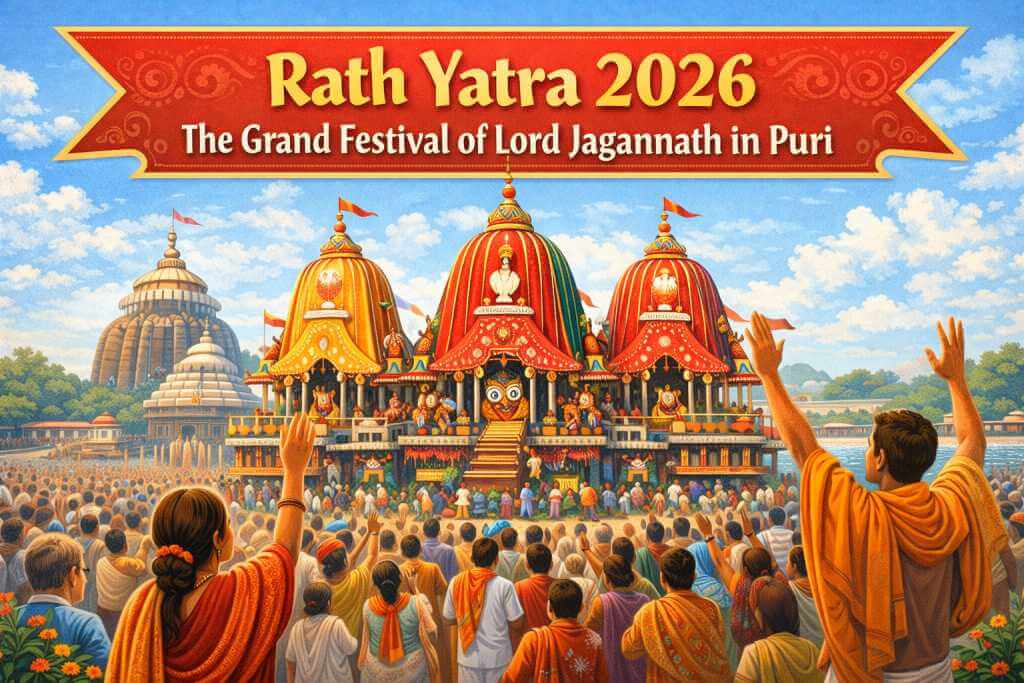
Based on the Hindu lunar calendar, the Rath Yatra event will take place on July 16, 2026. The celebration takes place on the second day (Dwitiya) of the bright fortnight in the month of Ashadha.
The three gods are put on their chariots and pulled from the Jagannath Temple to the Gundicha Temple on this day. Thousands of devotees watch the grand parade.
Important Ritual Dates of the Festival
A lot of important rituals happen before and after the main chariot procession as part of the Rath Yatra event. These ceremonies are an important part of the spiritual practice of the festival.
Some key rituals include:
- Snana Purnima – bathing the gods as part of a ceremony
- Anavasara – time when the gods stay away from everyone else
- Rath Yatra – the main chariot procession
- Hera Panchami – an important ritual during the stay at Gundicha Temple
- Bahuda Yatra – the return journey of the chariots
- Suna Besha – when the deities are adorned with golden ornaments
- Niladri Bijay – the final ritual marking the return of the deities to the temple
Duration of the Rath Yatra Celebration
The Rath Yatra festival usually lasts for about nine days. During this period, the deities stay at the Gundicha Temple before returning to the Jagannath Temple in a grand return procession known as Bahuda Yatra.
Rath Yatra Festival in Puri
Importance of Puri Rath Yatra
The Rath Yatra celebrated in Puri is the most famous and grandest Rath Yatra in the world. Devotees from across India and many other countries travel to the city to witness this extraordinary religious event.
The festival transforms the entire city into a center of devotion and celebration, with thousands of pilgrims filling the streets.
The Grand Chariot Procession
The highlight of the festival is the magnificent chariot procession. Three gigantic wooden chariots are constructed every year using traditional techniques and sacred wood.
Devotees gather in large numbers to pull the chariots using thick ropes, while priests perform rituals and devotional chants echo through the streets. The sight of the massive chariots moving slowly through the crowd is considered one of the most awe-inspiring moments of the festival.
Route of the Rath Yatra
The procession begins at the Jagannath Temple and travels along the Grand Road (Bada Danda) toward the Gundicha Temple.This route covers approximately three kilometers, and the chariots move slowly through the crowds of devotees who gather to witness the divine journey.
The Three Chariots of Rath Yatra
Nandighosa – Chariot of Lord Jagannath
The chariot of Lord Jagannath is known as Nandighosa. It is the largest of the three chariots and is decorated with red and yellow cloth.
Key features include:
- Height: approximately 45 feet
- Wheels: 16
- Charioteer: Daruka
This magnificent chariot carries Lord Jagannath during the procession.
Taladhwaja – Chariot of Lord Balabhadra
The chariot of Lord Balabhadra is called Taladhwaja. It is slightly smaller than the chariot of Lord Jagannath and is decorated with red and green colors.
Key features include:
- Height: about 44 feet
- Wheels: 14
- Charioteer: Matali
Darpadalana – Chariot of Goddess Subhadra
The chariot of Goddess Subhadra is known as Darpadalana. It is the smallest among the three chariots.
Key features include:
- Height: approximately 43 feet
- Wheels: 12
- Canopy color: red and black
- Charioteer: Arjuna
Major Rituals and Ceremonies
Snana Yatra – The Sacred Bathing Ritual
Snana Yatra is one of the important rituals performed before Rath Yatra. During this ceremony, the deities are ceremonially bathed with large quantities of sacred water in a public ritual.
After the bathing ceremony, the deities are believed to fall ill and are kept away from public view for a few days.
Anavasara – The Period of Seclusion
Following the Snana Yatra ritual, the deities remain in seclusion for a certain period known as Anavasara. During this time, temple priests perform special rituals while the deities are not visible to the public.
This period symbolizes rest and recovery before the grand chariot procession.
Pahandi – Bringing the Deities to the Chariots
The Pahandi ritual marks the ceremonial procession in which the deities are carried out of the temple and placed on their respective chariots.
Priests and temple servitors carry the idols in a rhythmic procession accompanied by music and chanting.
Chhera Pahanra – The Royal Sweeping Ritual
One of the most unique rituals of Rath Yatra is Chhera Pahanra, performed by Dibyasingha Deba Gajapati King of Puri . During this ritual, the king ceremonially sweeps the chariot platforms with a golden broom.
This act symbolizes humility and the belief that everyone is equal before the divine.
Bahuda Yatra – The Return Journey
After staying at the Gundicha Temple for several days, the deities return to the Jagannath Temple in a procession known as Bahuda Yatra.
This return journey marks the final phase of the Rath Yatra celebration.
Cultural and Spiritual Significance
Religious Importance for Devotees
For devotees, Rath Yatra is not just a festival but a deeply spiritual experience. Many believe that witnessing the chariot procession brings blessings and spiritual merit.
Scriptural references state that even seeing the chariot of Lord Jagannath can grant divine grace and liberation.
Spiritual Meaning of Pulling the Chariot
Pulling the ropes of the chariot is considered a sacred act of devotion. Devotees believe that participating in this act helps cleanse sins and strengthens their spiritual connection with the divine.
The act also symbolizes surrender to the will of God.
Devotee Participation from Across the World
Rath Yatra attracts pilgrims not only from across India but also from many parts of the world. International devotees and tourists visit Puri every year to witness the grand festival and experience its unique cultural atmosphere.
How to Experience Rath Yatra 2026 in Puri
Best Places to Watch the Festival
Some of the best places to witness Rath Yatra include:
- The Grand Road (Bada Danda)
- The area near the Lion Gate of Jagannath Temple
- Near Gundicha Temple
These locations offer excellent views of the chariot procession.
Travel Tips for Visitors
If you are planning to visit Puri for Rath Yatra 2026, it is advisable to plan your trip well in advance. Hotels and transportation often get fully booked due to the large number of visitors.
Arriving a few days before the festival can help you experience the rituals and avoid last-minute travel difficulties.
Safety Tips During the Festival
Due to the massive crowds during Rath Yatra, visitors should follow safety guidelines. Staying hydrated, wearing comfortable clothing, and following crowd control instructions are important for a safe experience.
Travel Tips for Rath Yatra 2026
Best Time to Arrive in Puri
Visitors are advised to reach Puri at least two or three days before the main Rath Yatra day. This allows enough time to explore the city and witness the preparations for the festival.
Accommodation Tips
Puri offers a wide range of accommodation options, including hotels, guesthouses, and dharamshalas. However, due to high demand during the festival season, booking in advance is strongly recommended.
Important Things to Know Before Visiting
One important rule to remember is that non-Hindus are not allowed to enter the Jagannath Temple. However, everyone is welcome to witness the Rath Yatra procession outside the temple.
Final Thoughts
Why Rath Yatra is a Must-Experience Festival in India
Rath Yatra is one of the most extraordinary religious festivals in India, combining spirituality, tradition, and cultural heritage. The sight of massive chariots moving through the streets of Puri, accompanied by millions of devotees, creates an unforgettable atmosphere of devotion and celebration.
For travelers and devotees alike, witnessing Rath Yatra offers a rare opportunity to experience one of the world’s oldest and most vibrant religious traditions centered around Lord Jagannath.
For a smooth and well-planned trip, explore all guides on:
Rath Yatra 2026 FAQ’s
What is the best way to reach Puri?
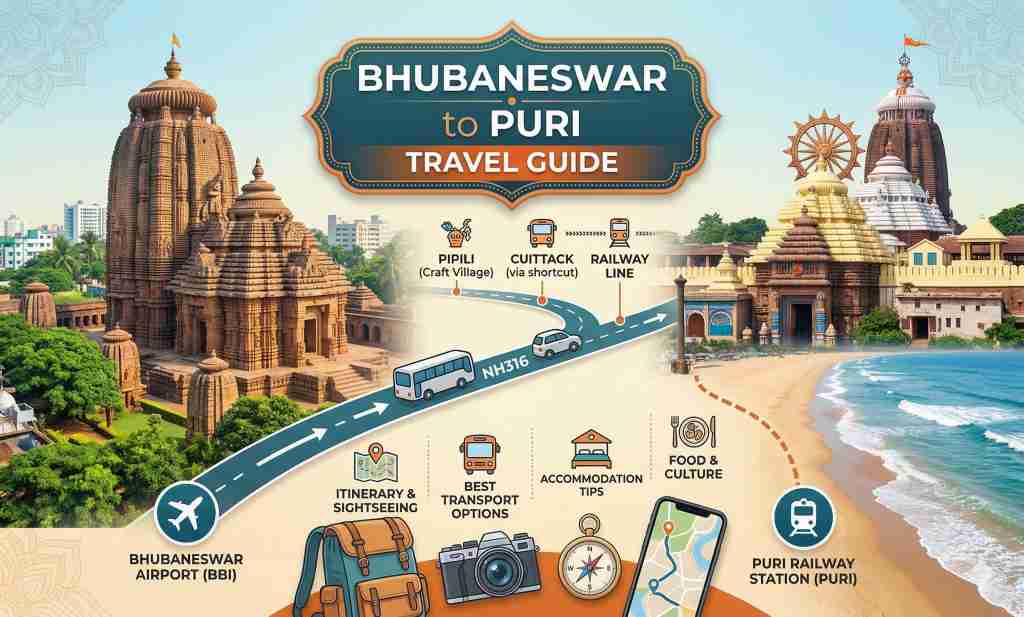
The best way to reach Puri is via Bhubaneswar. Travel to Bhubaneswar by flight or train, then take a taxi, bus, or train to Puri, which is about 60 km away and takes around 1–2 hours.
Which is the nearest airport to Puri?
The nearest airport to Puri is Biju Patnaik International Airport, located approximately 60 km away. From the airport, you can easily hire a cab or use public transport to reach Puri.
Does Puri have a railway station?
Yes, Puri Railway Station is well connected to major Indian cities like Delhi, Kolkata, Mumbai, and Chennai, making train travel one of the most convenient ways to reach Puri.
How far is Puri from Bhubaneswar?
The distance between Bhubaneswar and Puri is around 60 km. It takes about 1 to 2 hours by road or train, depending on traffic and the mode of transport.
Can I reach Puri by road?
Yes, Puri is well connected by road through NH-316. You can travel by private car, taxi, or bus from nearby cities like Bhubaneswar and Cuttack with good road conditions.
Are buses available to Puri?
Regular and deluxe buses operate frequently to Puri from nearby cities. Both government and private buses are available, making it an affordable travel option.
Is there any direct flight to Puri?
No, Puri does not have an airport. The closest airport is Biju Patnaik International Airport, from where you need to travel by road or train.
What is the best way to reach Puri for first-time visitors?
The best option is to reach Bhubaneswar by flight or train and then travel to Puri by road or rail.
How to reach Jagannath Temple from Puri Railway Station?
Jagannath Temple is about 2–3 km from Puri Railway Station. You can take an auto-rickshaw, cycle rickshaw, or walk to reach the temple easily.
What is the cheapest way to reach Puri?
The cheapest way to reach Puri is by train or bus. Indian Railways offers affordable ticket options, while buses provide budget-friendly connectivity from nearby cities.
When is the best time to travel to Puri?
The best time to visit Puri is from October to February when the weather is pleasant and suitable for sightseeing and temple visits.